October 07, 2026


You can spend a great deal of money on pipe smoking before you have finished your first tin. There are reamers with brass fittings, leather rolls with more pockets than a travelling salesman's suitcase, and stands carved from walnut. None of it will make the tobacco taste better. What follows is a working kit: the few things that solve real problems, followed by the extras that are genuinely worth adding later, once you know how you like to smoke.
If you buy only one accessory, make it this one. Tamping is the part of pipe smoking that surprises newcomers most. You light, you draw, the burn either dies or races away, and the cure is almost always a gentle press on the top of the ember. That press is the tamp, and it happens several times during a bowl.
Nothing fancy is required. A pipe nail — a small metal tool with a flat head and a curved end — costs very little, sits in a pocket without complaint and does the job perfectly. A three-in-one tool adds a pick for loosening tightly packed tobacco and a small spoon for clearing the bowl. What matters is technique rather than materials. Tamp with the weight of the tool alone, barely touching the ember. Pressing hard compresses the tobacco, restricts the draw and leaves you pulling on a blocked pipe that has to be dug out and relit.
One tip: keep the tamper where you actually smoke. A tool left in a drawer is a tool you will not use, and a bowl smoked without tamping is a bowl that goes out four times.
Cleaners are the cheapest part of the hobby and the part most often under-bought. Buy them by the hundred. Run a cleaner through the stem and shank after every bowl, while the pipe is still warm rather than hot — the warmth helps shift tar that sets hard once the pipe cools. Push from the mouthpiece end through towards the bowl, then swap in a fresh cleaner and repeat until it comes out more or less clean.
Two types are worth having on the shelf. Fluffy cleaners do the everyday work. Bristled cleaners, with their stiff nylon spines, shift stubborn tar from the shank and the draught hole when a fluffy one simply slides past. If you smoke a churchwarden or any pipe with an unusually long stem, buy the extra-length cleaners made for the purpose; a standard cleaner will not reach.
Do not reuse them. A clean pipe cleaner costs almost nothing, and a sour, gurgling pipe costs you an otherwise good evening.
This is where new smokers tend to overspend. Eventually you will need a reamer. A thin layer of carbon cake inside the bowl protects the briar, insulates the tobacco and helps keep the smoke cool. Left unchecked, though, cake narrows the chamber, traps moisture and can eventually damage the bowl.
But eventually is the operative word. A new pipe, or one you smoke a few times a week, will take months to build up cake worth removing. When the layer reaches roughly the thickness of a coin, it is time to think about it — and no sooner. When that day comes, work slowly: light pressure, a quarter turn at a time, and stop well before you see bare wood. A pipe knife or a dowel wrapped in fine abrasive paper will also do the job, but go carefully. Removing cake is easy; replacing it takes months.
Where you smoke decides what you carry. If you smoke out and about, a folding pouch is the practical answer. Look for one with a rubberised or latex-lined interior rather than plain fabric, which lets a blend dry out within days. A small pocket for a lighter is a nice touch, though not a reason to buy one pouch over another.
At home, a glass jar with a rubber seal beats any pouch. It holds moisture better, lets you see how much is left, and takes up less space than you would think. Label the jars. Once the tin is gone, blends look remarkably alike, and a mystery jar of something you never really liked is a small ongoing tragedy.
A pipe needs to rest between smokes. Smoke a briar, then leave it a day or so before its next bowl — which is how most people end up owning more than one pipe. A stand or pipe rest holds the pipe upright while it cools, keeps the rim off the table and stops it rolling onto the floor. A simple wire rest or wooden cradle is all you need.
If you smoke the same pipe twice in an evening, rest it on the stand between bowls rather than leaving it propped in an ashtray, where it will tip ash onto the furniture. For taking pipes out of the house, a pipe sock or a soft roll keeps stems from snapping in a bag. That can wait until you actually carry a pipe somewhere.
Buy these first:
Add these later:
Safe to skip: decorative stands bought before you know which pipes you favour, tampers with anodised finishes, and any leather case with more pockets than pipes.
Buy the tamper, the cleaners, the lighter and something to keep tobacco in. Live with those for a few months and you will learn what your smoking actually demands — which pipes you reach for, how often you clean, whether you carry tobacco with you at all. Then add the stand, and later the reamer when the cake tells you it is time. Everything beyond that is preference, and preference is best discovered slowly.
One sensible note to finish on: pipe smoking is not a safe alternative to cigarettes. It carries real risks to the mouth, throat and lungs, and if you have concerns about how it affects you, raise them with your GP. Keep the pipe a pleasure rather than a habit you feel obliged to defend.
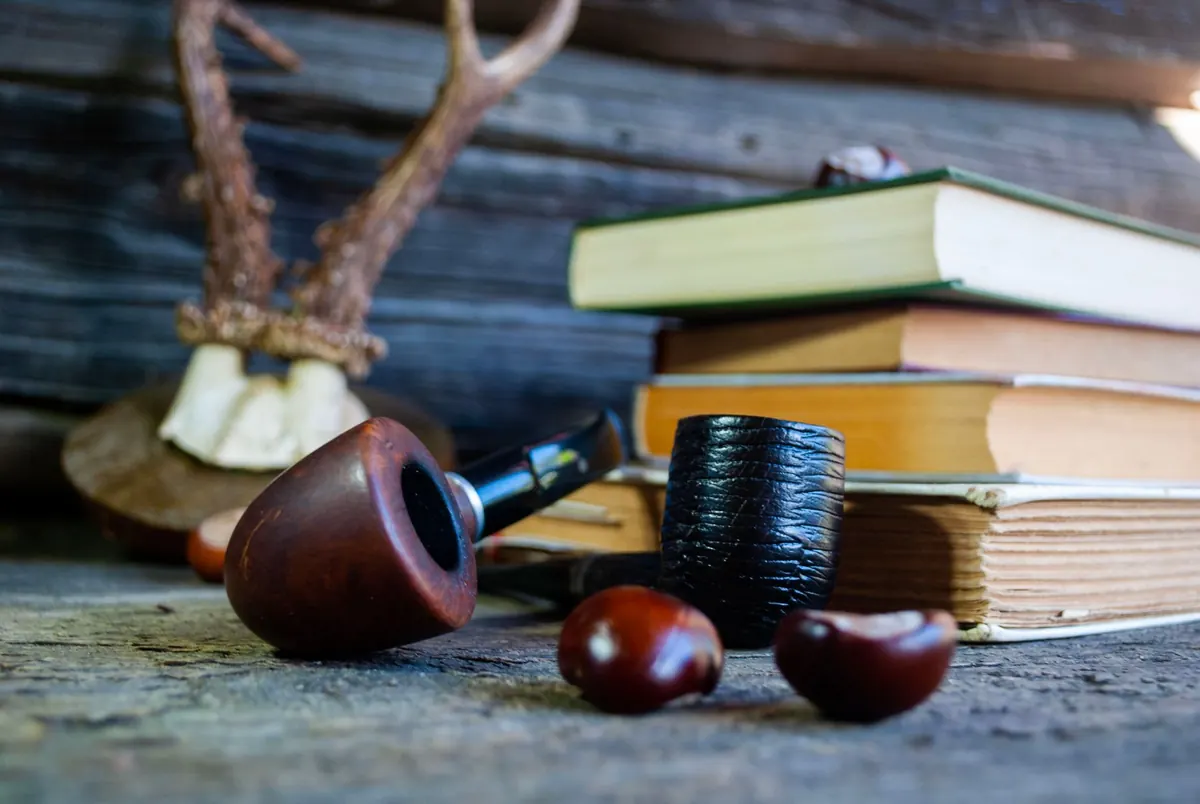
Photo: AlLes / Pixabay
The magazine for briar pipe enthusiasts.
Copyright © 2026 Briar Mag. All rights reserved. Briar Mag.